Knowledge ·
Six Track Spotlight Specification Errors That Hurt Retail Sales
Six common track spotlight specification mistakes — from chasing efficacy to skipping beam angle simulation — that reduce merchandise appeal and dwell time in retail environments.
Luminaire selection for retail track lighting has a direct bearing on how merchandise looks, how long customers stay, and ultimately whether they buy. The six errors below are the most consistently observed across specification and procurement decisions, each with the parameters needed to avoid them.
Chasing Efficacy at the Expense of Colour Rendering
A fixture rated at 150 lm/W looks attractive on a datasheet, and the efficiency is real. The problem is that very high efficacy figures are usually achieved through cool correlated colour temperatures and broad-spectrum chips optimised for lumen output rather than chromatic accuracy. The result on-shelf is colour distortion: food looks dull, apparel reads as grey.
The correct priority order for retail track spotlights is colour quality first, efficacy second. Colour Rendering Index (CRI/Ra) should be Ra 90 as a floor, with Ra 95 or above specified for primary display zones. An efficacy range of 100–130 lm/W is sufficient for commercial track applications without the rendering compromises that come from pushing further.
Using a Single Colour Temperature Across the Entire Floor
A single correlated colour temperature is easy to specify and easy to procure, but it eliminates visual hierarchy. Different merchandise categories respond to different CCTs, and flattening everything to one value produces a floor with no focal points.
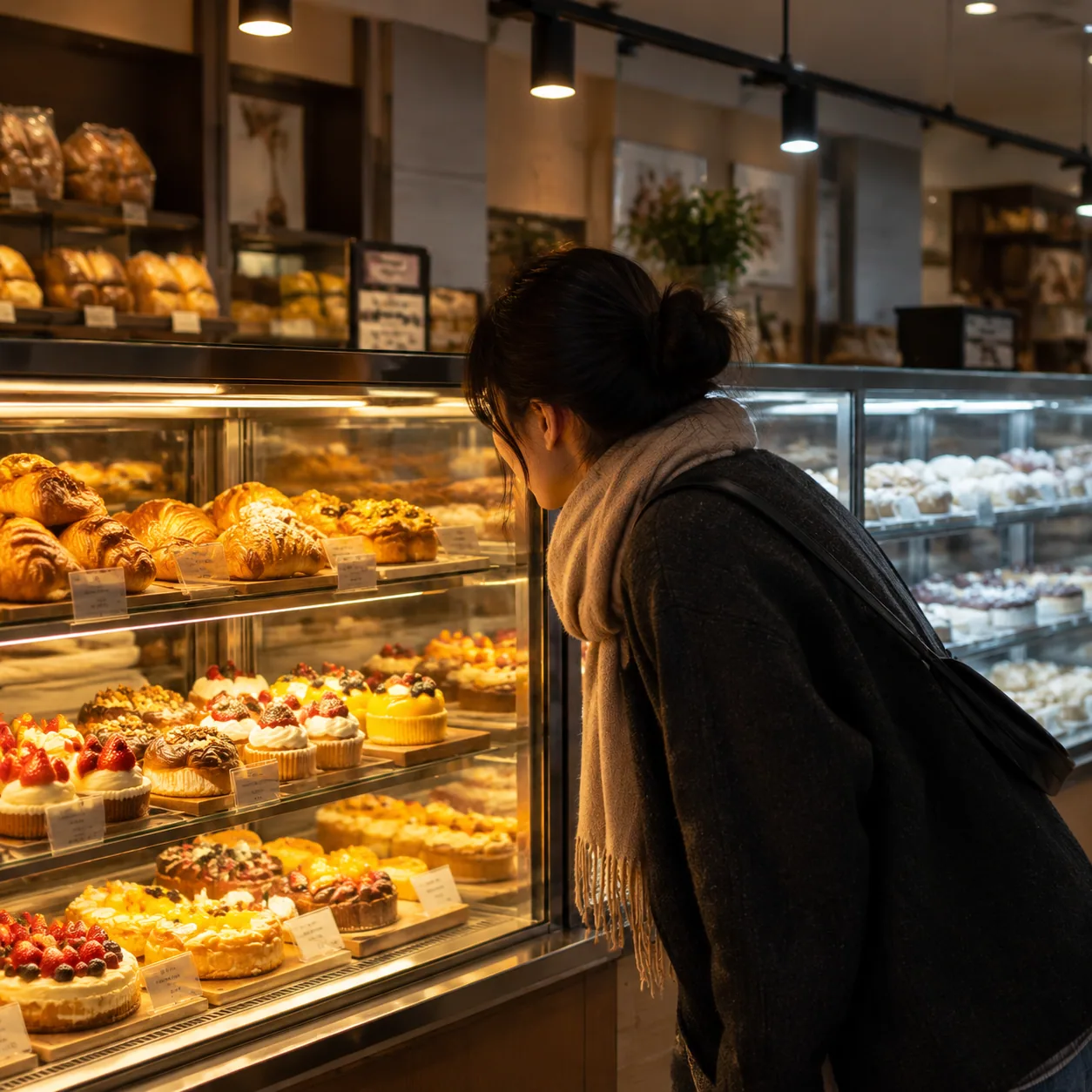
Warm white around 3,000 K suits apparel and home goods, where material texture and depth benefit from a warmer cast. Food and bakery displays read better at 2,700–3,000 K. Jewellery and consumer electronics, where the visual expectation is precision and cleanliness, sit better at 4,000–5,000 K. Ambient fill lighting can reasonably use 3,500–4,000 K. The practical constraint is to keep CCT variation within any single zone to 500 K or less, which prevents the visual discontinuity of adjacent light sources in obvious conflict.
Specifying Ra Without Checking R9
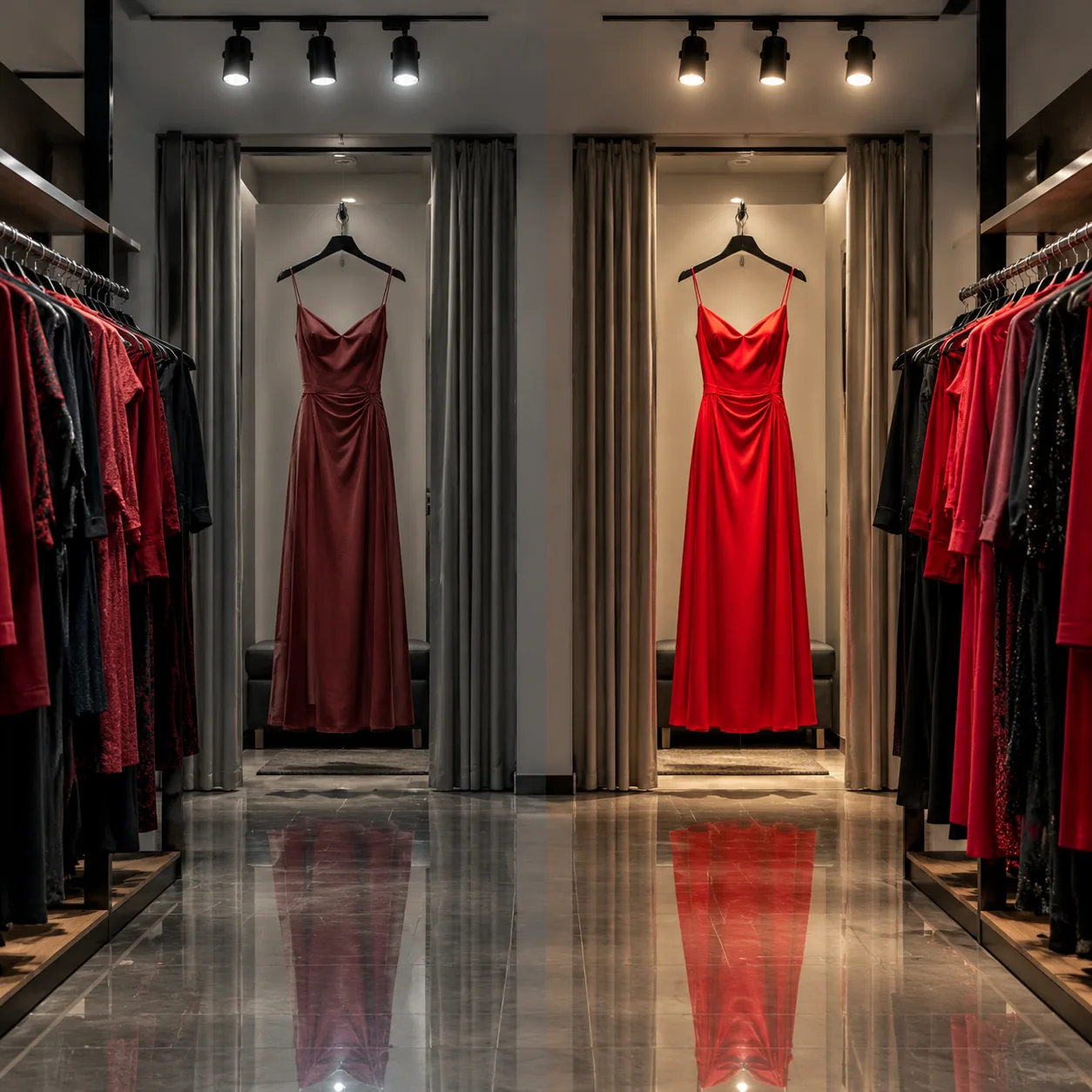
Ra is a mean score across eight standard test colours, none of which is a highly saturated red. A luminaire with Ra 92 can still have an R9 value — the individual metric for red rendering — as low as 15 or 20. In a fashion or food context, that means red and warm-toned merchandise appears flat and undersaturated under a fixture that the datasheet describes as high-CRI.
The R9 specification has a documented impact on conversion behaviour in fitting rooms and at point-of-decision. Live With Matter's project reviews have found that lifting R9 from the mid-teens to above 60 is consistently the most influential single parameter change in apparel environments.
The minimum thresholds worth specifying: R9 above 50 for food, floristry, and fashion; R9 above 80 for premium retail and gallery-adjacent display. Both Ra and R9 should be required fields on any fixture schedule or acceptance checklist.
Treating Higher Wattage as the Path to Accent Impact
The goal in accent lighting is contrast ratio, not raw illuminance. Increasing luminaire wattage raises the ambient level alongside the accent level, which compresses the ratio and removes the punch. The recommended target for primary display zones is a maintained illuminance of 800–1,200 lx against a circulation level of 200–300 lx, achieving a focal-to-ambient ratio between 3:1 and 5:1.
Stacking wattage also worsens glare. Unified Glare Rating (UGR) above 22 produces measurable discomfort that shortens dwell time. Retail track spotlights should be specified with UGR below 19, achieved through anti-glare optical design — honeycomb louvres, deep-set apertures, or lens systems — rather than reduced output. Lighting Power Density (W/m²) for retail is generally held below 12–15 W/m² as a reference ceiling, which is worth using as a sanity check on any layout proposal.
Assuming LED Means Flicker-Free
LED sources are not inherently flicker-free. The light output of an LED is a direct function of the current through it, and a driver with poor power factor correction or low-quality smoothing capacitors will produce 100 Hz flicker that is invisible to direct perception but physiologically present. Extended exposure drives visual fatigue and, in retail settings, tends to reduce the time customers spend in the space without them being consciously aware of the cause.
Flicker Percent above 30% is measurable with a phone camera as visible banding in captured footage. The target specifications are Flicker Percent below 10% and Flicker Index below 0.1. For dimming installations, these thresholds need to be verified at the low end of the dimming curve, not just at full output — flicker compliance often degrades significantly at 10–30% output levels, and only drivers rated as dimming-compatible and tested at reduced load meet the standard reliably.
Skipping Beam Angle Simulation Before Track Layout
Track systems are flexible by nature, but flexibility does not remove the need for pre-installation photometric modelling. Beam angle and mounting height together determine the illuminated footprint and centre-point illuminance, and the variation is large enough to matter.
At a mounting height of 3 m, a 24-degree beam angle produces a spot diameter of roughly 1.3 m with a centre illuminance around 800 lx. Switching to a 36-degree beam at the same height expands the footprint to approximately 2 m while reducing centre illuminance to below 400 lx. The difference between hitting a garment and washing the wall behind it often comes down to this choice, made without calculation.
The practical beam angle guidelines: 15–24 degrees for individual product highlights at mounting heights of 2.5–3.5 m; 36–60 degrees for shelf-wide fill or display tables. A photometric simulation in DIALux or Relux, run before track positions are committed, prevents the common outcome of fixtures installed and immediately repositioned because the layout produced flat, overlapping pools with no hierarchy.
Selection Checklist
| Parameter | Minimum specification |
|---|---|
| Colour Rendering Index (Ra) | Ra 90; Ra 95 for primary display zones |
| R9 red rendering | 50 (standard retail); 80 (premium or art-adjacent) |
| Colour temperature by category | 2,700–3,000 K food/bakery; 3,000 K apparel/home; 4,000–5,000 K jewellery/electronics |
| Unified Glare Rating (UGR) | Below 19 |
| Flicker Percent | Below 10% |
| Flicker Index | Below 0.1 |
| Beam angle (product highlight) | 15–24 degrees at 2.5–3.5 m mounting height |
| Lighting Power Density | 12–15 W/m² reference ceiling |
Photometric files and flicker test reports should be requested as standard deliverables during fixture approval. Live With Matter provides DIALux simulation as part of its specification support process for projects where layout validation is required before procurement is finalised.